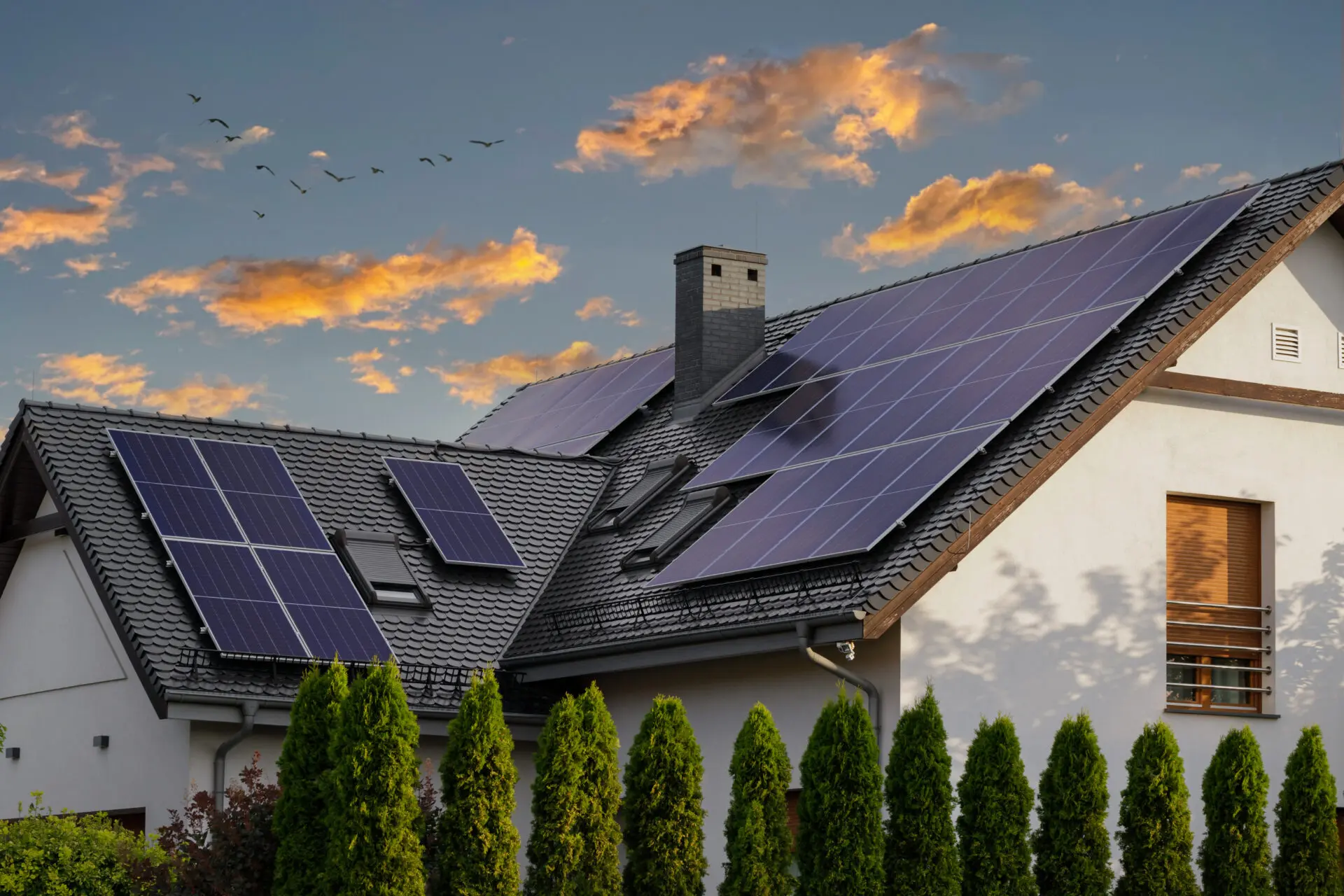


Theinstallation of photovoltaic panels offers many advantages for private individuals in Belgium, particularly in 2023, when sustainable energy transition has become a priority. By generating their own electricity from solar power, house and apartment owners can not only reduce their energy costs, but also actively contribute to preserving the environment. In this article, we’ll explore in detail the many advantages that photovoltaic panels offer Belgian homeowners, as well as the criteria for choosing and the profitability of this sustainable energy solution.
Contenu de l'article
What are the different types of photovoltaic panels?
Photovoltaic panels come in many different types on the market, offering varying characteristics and performance. Each type of panel has its own advantages and disadvantages, enabling homeowners to choose the one that best suits their energy needs and budget. Here are the two main types of photovoltaic panels available:
- Monocrystalline panel
- Polycrystalline panel
Discover the main features of these panels.
Monocrystalline vs. polycrystalline panels
Why choose monocrystalline panels?
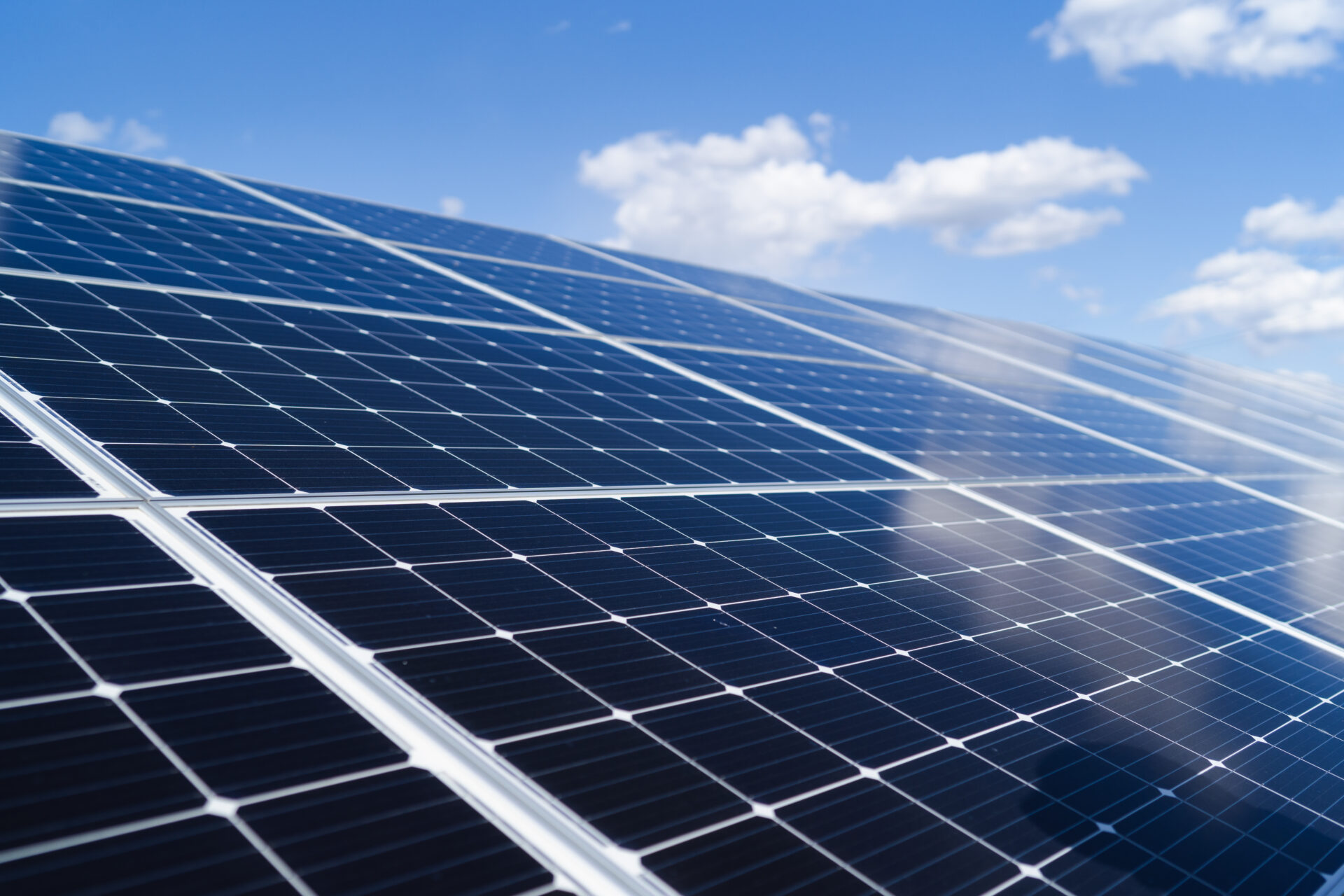
Monocrystalline panels are renowned for their high efficiency in converting solar energy into electricity. They are made from a single silicon crystal structure, giving them a uniform, dark appearance. Their high efficiency means they take up less roof space to produce the same amount of electricity as polycrystalline panels. Monocrystalline panels are particularly suited to installations where space is limited, and are often the preferred choice for high-end residential projects.
Why choose polycrystalline panels?
Polycrystalline panels are made from several silicon crystals, giving them a bluish appearance. Although they have a slightly lower yield than monocrystalline panels, they are generally less expensive to produce, making them more affordable for homeowners. Polycrystalline panels are an attractive option for roofs with a larger available surface area, as their slightly lower efficiency is compensated for by a larger collector surface.
What are the criteria for choosing photovoltaic panels?
When it comes to choosing toinstalling photovoltaic panels for a residential installation in Belgium, it’s essential to consider the specific energy needs of the household. Various factors will influence the choice of panels, including household electricity consumption, available roof size,geographical location and budget preferences. Here are a few things to consider when selecting the panels best suited to your energy needs:
Energy consumption analysis
Before choosing photovoltaic panels, it’s important to carry out a thorough analysis of your household’s energy consumption. Take into account your
System sizing
Depending on your energy consumption, you’ll need to determine the size of photovoltaic panel system required to meet your needs. Our experts can help you with precise sizing, taking into account panel power, local sunlight and the orientation of your roof.
Roof space
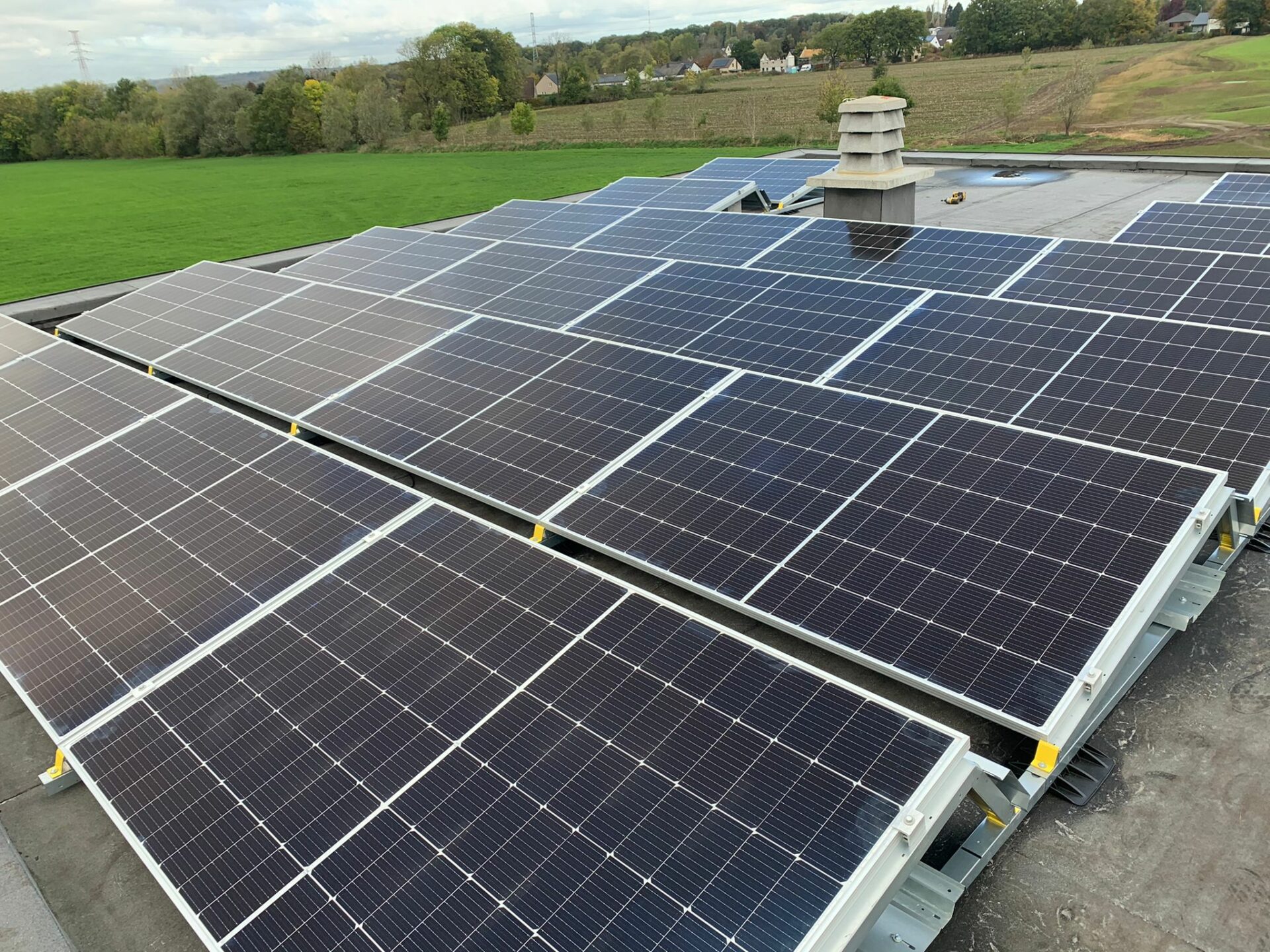
The space available on your roof will determine how many panels you can install. Monocrystalline panels, being more efficient, require less surface area to generate the same amount of electricity as polycrystalline panels. If you have a small roof area, monocrystalline panels may be a wise choice.
Roof orientation and pitch
Theorientation of your roof in relation to the sun and its inclination will have an impact on the efficiency of your photovoltaic panels. Ideally, panels should face due south and be tilted at an angle close to the latitude of the location to maximize solar energy capture.
Budget preferences
The cost of installing photovoltaic panels varies according to the type of panels chosen and the size of the system. It’s important to define a budget in line with your financial possibilities, while evaluating the long-term return on investment in terms of energy savings.
What are the advantages of installing photovoltaic panels?
1) Reducing energy costs

Visit photovoltaic panels allow individuals to significantly reduce their electricity bills. With electricity tariffs rising steadily in Belgium, self-generation of solar energy is becoming a more than attractive solution. By generating your own electricity, you can stabilize your energy costs over the long term and make substantial savings.
2) Prosumer tariff compensation
At present, a prosumer tariff compensation premium is applied in Wallonia for homes fitted with photovoltaic panels. This premium is equivalent to 54.27% of the prosumer tariff, and enables a faster return on the initial investment. Be careful, however, as this premium will be abolished as of January 2024. So you only have a few months left to benefit.
3) Energy independence and resilience
Installing photovoltaic panels offers private customers a degree of energy independence. By generating your own electricity, you reduce your dependence on the traditional electricity grid. What’s more, photovoltaic panels are capable of supplying electricity even in the event of a power failure, ensuring stable operational continuity.
By combining your photovoltaic panels with storage batteriesyou can store excess energy for later use, even in the event of a power failure. Enjoy greater energy autonomy and stable operational continuity for your home!
4) Environmental sustainability
By opting for photovoltaic panels, every home contributes to environmental sustainability. Photovoltaic panels reduce carbon emissions, helping to combat climate change. By producing clean, renewable energy, you play an active role in the energy transition and contribute to a more sustainable future.
5) Financing and financial incentives
It’s essential to consider the financial aspects of a photovoltaic panel installation. In Belgium, tax tax incentives and deductions are available are available for households investing in solar energy. You need to consult experienced professionals who are committed to a job well done, to assess the costs and return on investment specific to each situation.
To sum up, photovoltaic panels offer a number of advantages for private customers in Wallonia. They reduce energy costs, benefit from a prosumer tariff compensation (until 2024) and reinforce energy independence. What’s more, by choosing solar energy, you’re actively contributing to environmental sustainability.
Are photovoltaic panels profitable?
When individuals consider installing photovoltaic panels on their property, one of the key questions is whether this is really cost-effective. The profitability of photovoltaic panels depends on a number of factors, such as the initial cost of installation, savings on electricity bills, available financial incentives and the lifespan of the photovoltaic panels. Let’s take a closer look at the factors that determine the profitability of photovoltaic panels for private customers in Belgium:
Initial cost of installing photovoltaic panels
The initial cost of installing photovoltaic panels can be a significant investment for private individuals. It generally includes the cost of the panels, inverters, mounting system, cables andinstallation itself. However, it’s important to note that
Savings on electricity bills thanks to photovoltaic panels
One of the main advantages of photovoltaic panels is the savings they make on electricity bills. By generating their own electricity from solar power, homeowners can reduce their dependence on traditional electricity suppliers, and thus cut their electricity bills. The more efficient the photovoltaic panels, and the more closely they match the household’s energy consumption, the greater the savings.
Service life of photovoltaic panels
Photovoltaic panels have an average lifespan of around 25 to 30 years. During this period, they will continue to generate electricity, although their yield may decrease slightly over time. Once the initial cost of installation has been recouped through savings on electricity bills, photovoltaic panels will continue to provide free electricity for many years, improving their profitability.
Return on investment
Return on investment (ROI) is a key indicator of the profitability of a photovoltaic panel. It represents the time needed to recover the initial cost of the installation through savings on electricity bills. A photovoltaic panel with a short ROI will pay for itself more quickly for homeowners.
The profitability of photovoltaic panels for homeowners in Belgium depends on the initial cost of installation, savings on electricity bills, available financial incentives and the lifetime of the solar system. Although the initial investment may seem significant, long-term savings on electricity bills, financial incentives and the lifetime of the system make photovoltaic panels a profitable option for many homeowners.
Do you have a question about photovoltaic panels?
If you’re interested in photovoltaic panels and would like to find out more, or if you have any specific questions on the subject, contact us today. Our team of experts is at your disposal to answer all your questions and help you find the best solution for your needs.
Don’t hesitate to contact usWe’d be delighted to support you in your ecological approach!