

As of June 1, 2025, Brussels bans the sale and replacement of oil-fired boilers. In Wallonia, the regulations are still uncertain, but all indications are that the ban will follow as early as 2026.
This move towards green energy is prompting households to look for sustainable alternatives for heating sanitary water. The boiler powered by photovoltaic panels seems to be the solution!
Contenu de l'article
Things to remember
- Brussels has already banned fuel oil (2025), with Wallonia set to follow in 2026.
- The boiler powered by solar panels uses the electricity generated by your panels to heat the water.
- It’s an ecological ecological, economical and sustainable.
- Installation is quick and easy.
- The best way to take action is to request a quote from specialists like Vectura.
How does a boiler powered by photovoltaic panels work?
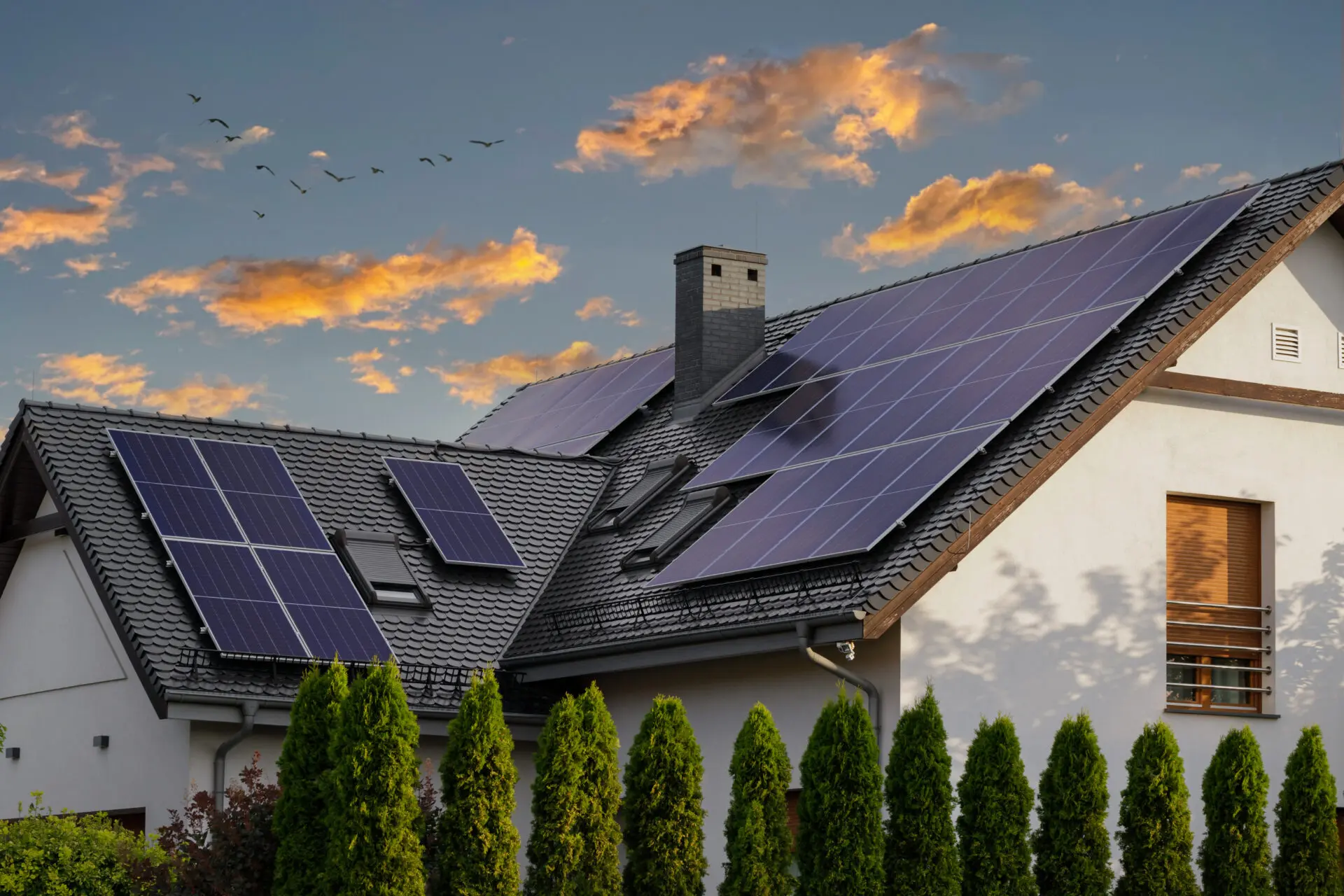
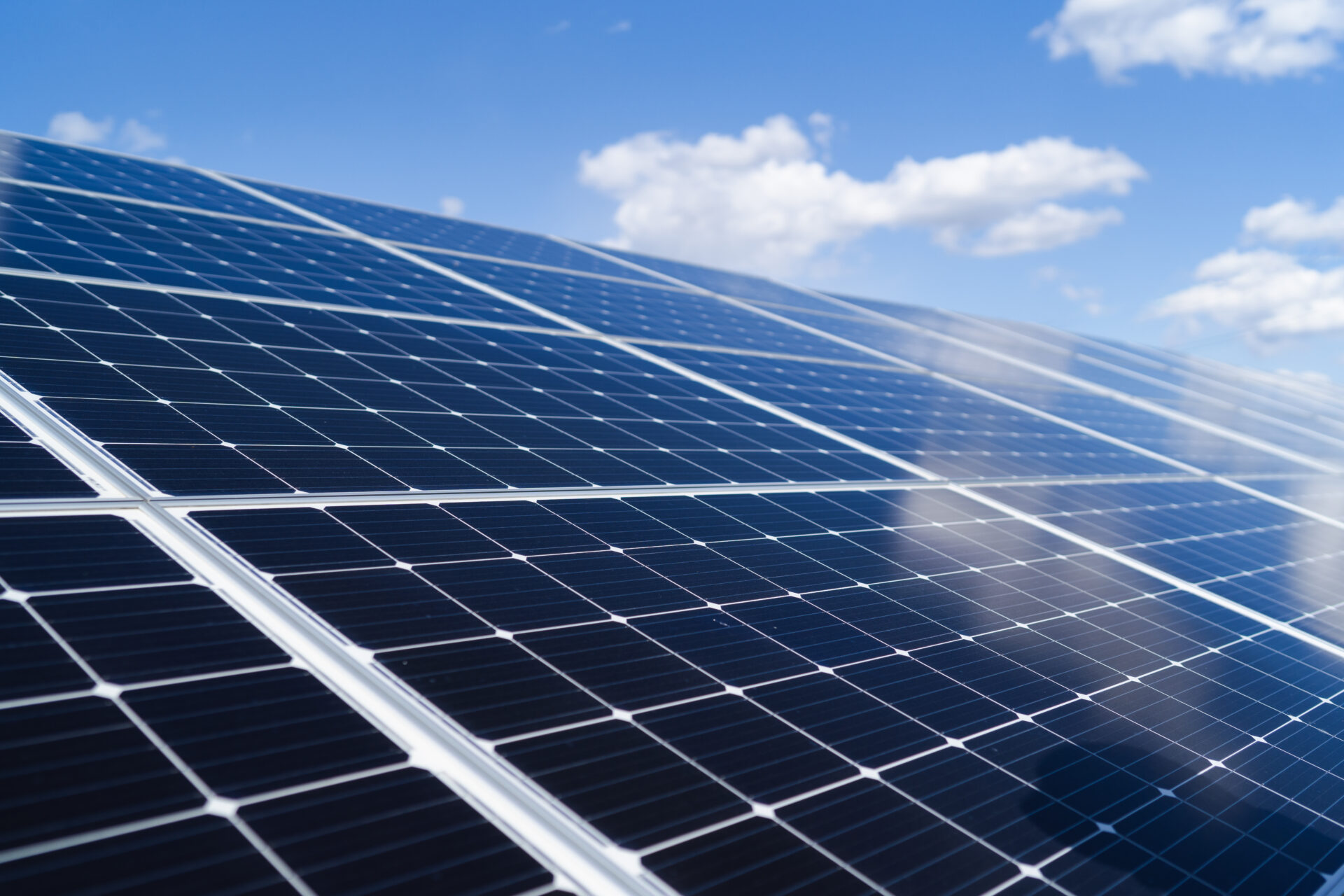
Visit photovoltaic panels capture the sun’s energy and transform it into electricity. This renewable electricity is used directly to power an electric boilerwhich heats your domestic hot water. This is the principle ofself-consumption !
Unlike gas or oil, there is no combustion no combustion or pollutant emissions. You simply benefit from clean, year-round solar energy.
Why install solar panels to heat your water?
Reduce your expenses
Our solar panels cover a large part of your needs. A water heater needs electricity: your panels provide it.
Anticipating new legislation
The energy transition is gathering pace. By installing your solar panels nowyou secure your home’s compliance and retain the freedom to add a thermodynamic boiler later.
Gaining autonomy
With photovoltaics, we reduce your dependence on the grid and on price rises. At your own pace, you can top it up later with a battery and/or a thermodynamic boiler to get even more out of your solar kWh.
Choosing an environmentally-friendly solution
You reduce your carbon footprint and, the day you add a boiler, every liter of hot water benefits from your clean energy.
Contact our team if you still have doubts about installing photovoltaic panels.
Before you take the plunge, it’s worth knowing that the benefits can vary depending on your meter type. Are you prosumer or non-prosumer ? Let’s see what this means for you.
What are the advantages of prosumers and non-prosumers?
To begin with, the prosumer is a consumer-producer of electricity. He owns photovoltaic panels connected to a meter that turns upside down and pays the prosumer tariff.
The non-prosumerhas a smart meter and operates on the proportional tariffwith no automatic compensation for electricity reinjected.
Benefits for the Prosumer
- Lower prosumer tariffs
The prosumer tariff (around €86/kWe) is calculated on the basis of an estimated 37% self-consumption.
In fact, if you consume more energy yourself and have a smart meter with a proportional tariff, your prosumer tax will naturally fall.
The addition of a domestic battery increases this rate of self-consumption, and therefore reduces the tax imposed.
- Anticipating the end of the counter turning upside down
The reverse meter system will be phased out in Wallonia by 2030.
Investing now in a battery or storage system secures your future costs and avoids the expected rise in future prices and delivery times.
- Reduced stall and improved network stability
By coupling your installation to a back-up system, your panels continue to operate even in the event of a power cut.
The result: fewer stalls and therefore less loss of solar energy.
- Energy security
In the event of a power cut, your battery-equipped photovoltaic system can continue to power your home’s appliances.
This gives you greater autonomy and comfort, while reducing your dependence on the grid.
Benefits for non-Prosumers
- Self-consumption
The non-prosumer can store surplus solar electricity for reuse in the evening or at night. This reduces the need to purchase electricity from the grid and increases the profitability of the installation.
- Reducing dropout
As with prosumers, the back-up system enables the plant to continue operating even in the event of a power cut.
Fewer stalls mean less energy loss.
- Energy security
In the event of a grid failure, a battery and back-up system maintains the power supply to your home.
This energy independence is becoming a major asset in the face of rising electricity prices and grid instability.
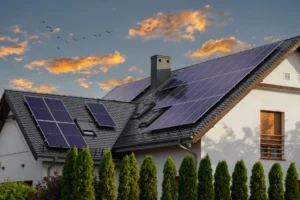
What role do Vectura and Novitra play in your installation?
- Vectura is a specialist in photovoltaic panels and offers installations to maximize your solar production.
- Novitra installs boilers that can be compatible with photovoltaic electricity.
Together, we offer a complete solution for generating and using your own energy.
How much does it cost to install solar panels to power an electric boiler?
The cost of an installation combining photovoltaic solar panels and electric boiler depends on a number of parameters. There is no fixed amount, as each project is unique and must be tailored to the needs of the household.
The main factors to consider :
- Your daily hot water consumption This determines the amount of solar electricity needed to power your boiler. A large family has different needs to a couple.
- The size and orientation of your roof The size and orientation of your roof influence the output of your photovoltaic panels. The more your panels produce, the more you can cover your hot water needs with solar energy.
- The number of photovoltaic panels installed This is the central element of the project. The higher your energy requirements (boiler + other electrical appliances), the larger the installation will need to be.
- Choosing an electric boiler The electric boiler: a complementary boiler with a capacity adapted to your consumption and the energy produced by your panels.
The best way to get an estimate is to ask for a quote.
What are the different stages of your future sustainable project?
Installation involves several stages:
1. Energy analysis
A Vectura consultant assesses your hot water and electricity requirements. This helps determine the number of solar panels needed to power your boiler.
2. Technical survey of the roof
We analyze the orientation, inclination and shading of your roof to ensure optimum production from your panels.
3. System sizing
Depending on your needs, we’ll design a photovoltaic system tailored to your specific requirements, taking into account your future consumption (boiler, household appliances, electric car…).
4. Photovoltaic panel installation
Our technicians install your panels in compliance with safety and performance standards.
5. Electrical boiler installation and connection
Thanks to our partner Novitraa boiler is connected to your panels. It works primarily with your solar electricity, limiting your consumption on the grid.
6. Commissioning and follow-up
We test the system, start it up and explain how it works. You’ll immediately benefit from hot water 100% solar hot water.
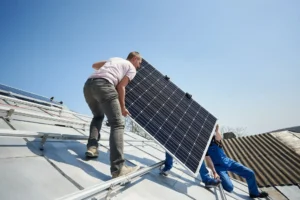
FAQ about boilers with solar panels
Can I cover 100% of my hot water needs?
In summer, yes. In winter, you may need to top up your electricity from the grid.
How long do photovoltaic panels last?
Between 25 and 30 years, with profitability achieved in 6 to 8 years.
Is it complicated to install?
No, installation is quick and requires no major work.
Do the panels also produce in winter?
Yes, even if production is lower than in summer.
What happens in winter when photovoltaic production is lower?
Your boiler can be partially solar-powered. A supplement via the grid ensures your comfort.
How many solar panels are needed to power an electric boiler?
This depends on your hot water consumption and the boiler’s capacity. A study by one of our experts will enable us to size the installation.
Is it profitable to install a boiler with solar panels in Wallonia?
Yes, profitability is achieved in just a few years thanks to energy savings.
Prepare now for the post-mazout era
With the ban already in force in Brussels since June 2025 and expected in Wallonia from 2026we need to prepare for the energy transition.
The boiler powered by solar panels is a sustainable and cost-effective solution for producing hot water from the sun.
At Vecturawe support you from the planning stage to the installation of your photovoltaic panels. Contact us today for a free, no-obligation quotation.
Glossary
- Solar energy Energy produced by the sun’s rays.
- Photovoltaic panels devices that convert sunlight into electricity.
- Electric boiler A tank that heats and stores water using electricity.
- Self-consumption Direct use of electricity generated by your own panels.
- Energy transition gradual shift to renewable energies.
- Energy savings Energy savings: reduced electricity consumption.
- Solar generation electricity generated by photovoltaic panels.
- Renewable energy clean, inexhaustible energy, such as solar power.
- Energy autonomy : independence from the electricity grid.
- Sustainable investment A purchase that retains its value over the long term.
- CO₂ emissions. : greenhouse gas reduced thanks to photovoltaics.
- Photovoltaic installation Photovoltaic system: installation of solar panels on a roof.
This article was created on September 19, 2025 from official legal sources:
- Walloon Government Order of June 5, 2025 (Numac: 2025006638) amending the Walloon Government Decree of May 15, 2014 implementing the Decree of November 28, 2013 on the energy performance of buildings, and introducing the obligation to incorporate a minimum share of renewable energy in new buildings from January 1, 2026.
- Ordinance and EPB regulations of the Brussels-Capital Region (effective June 1, 2025) prohibiting the installation of new oil-fired boilers, published by Brussels Environment as part of the Brussels Code on Air, Climate and Energy Management.