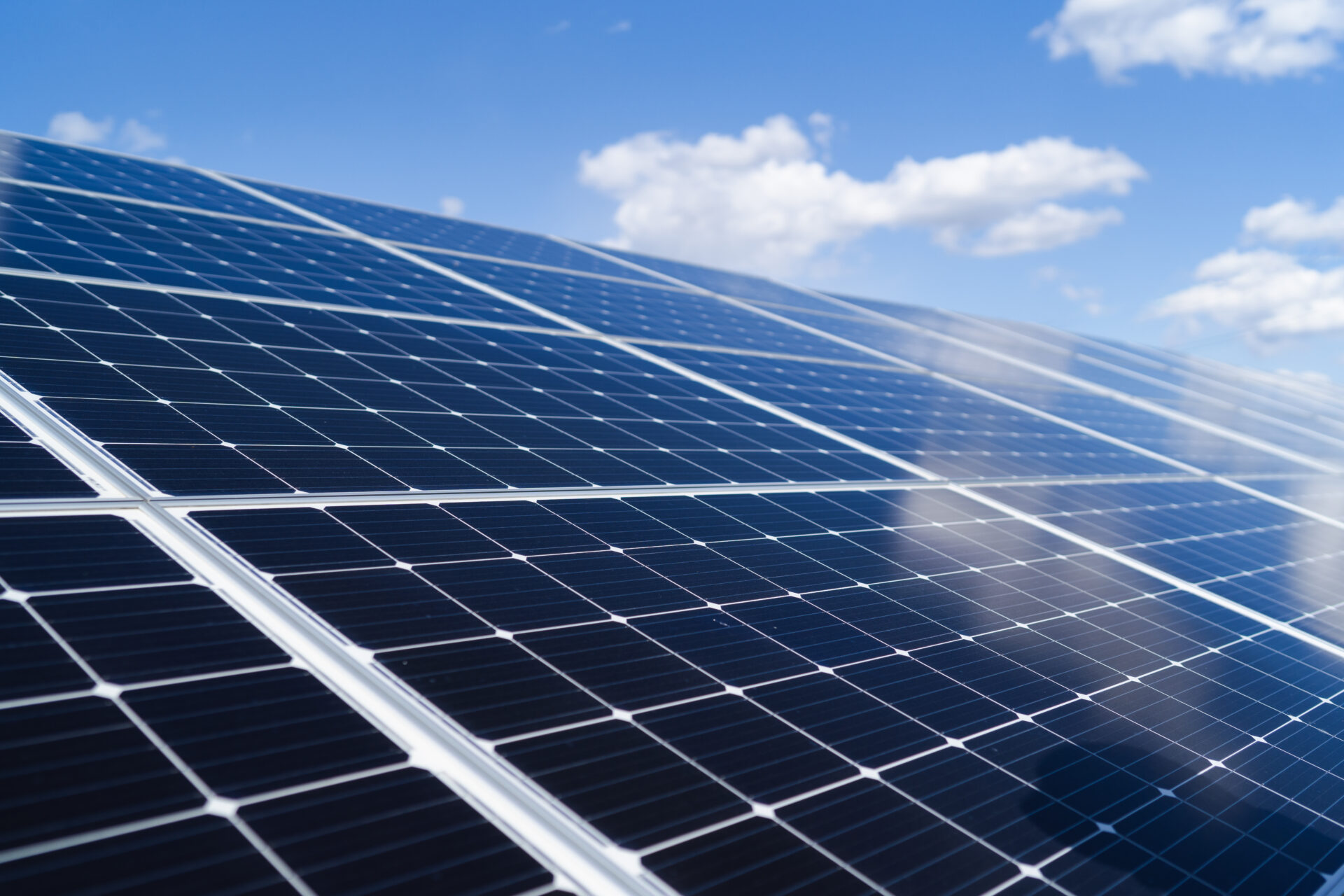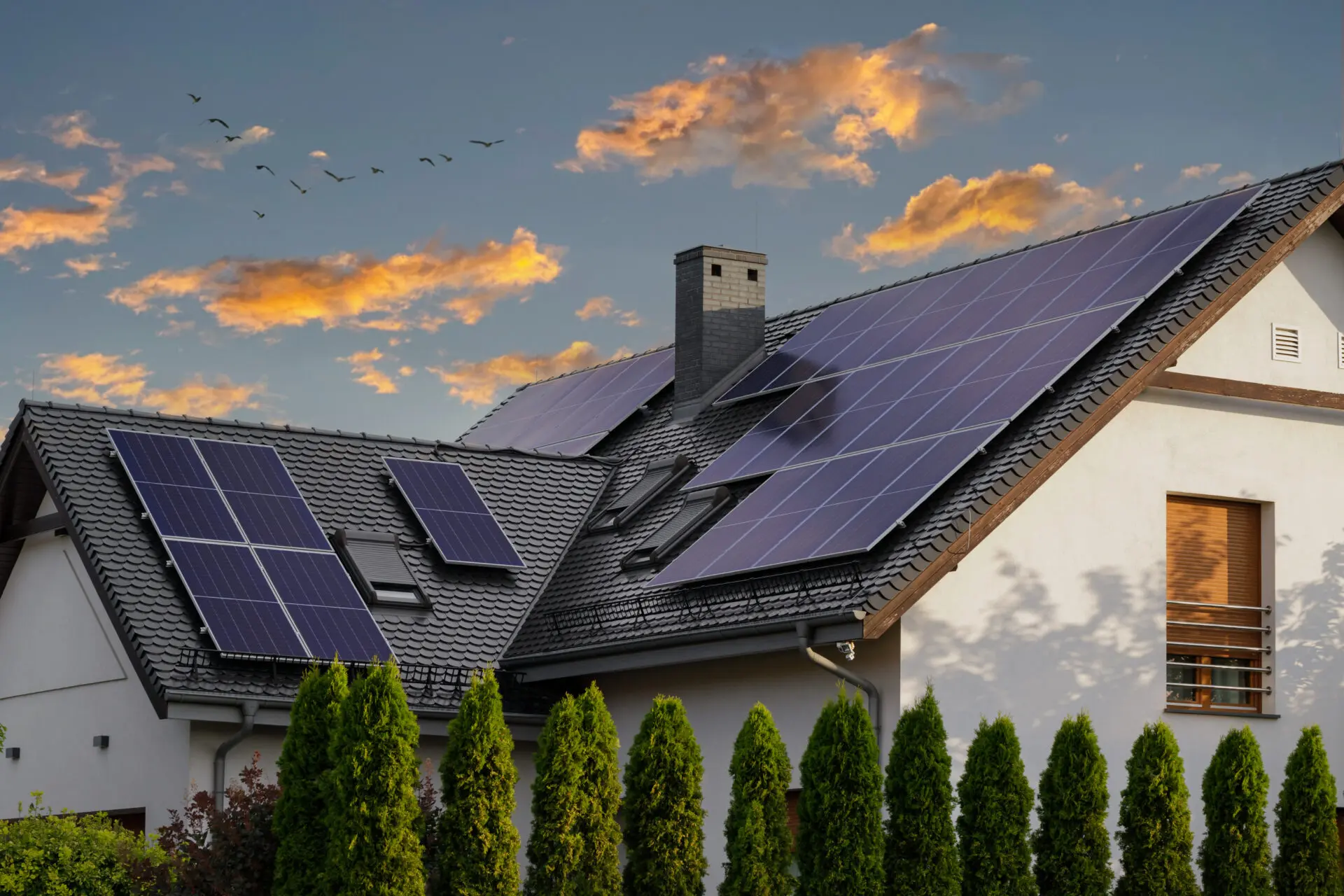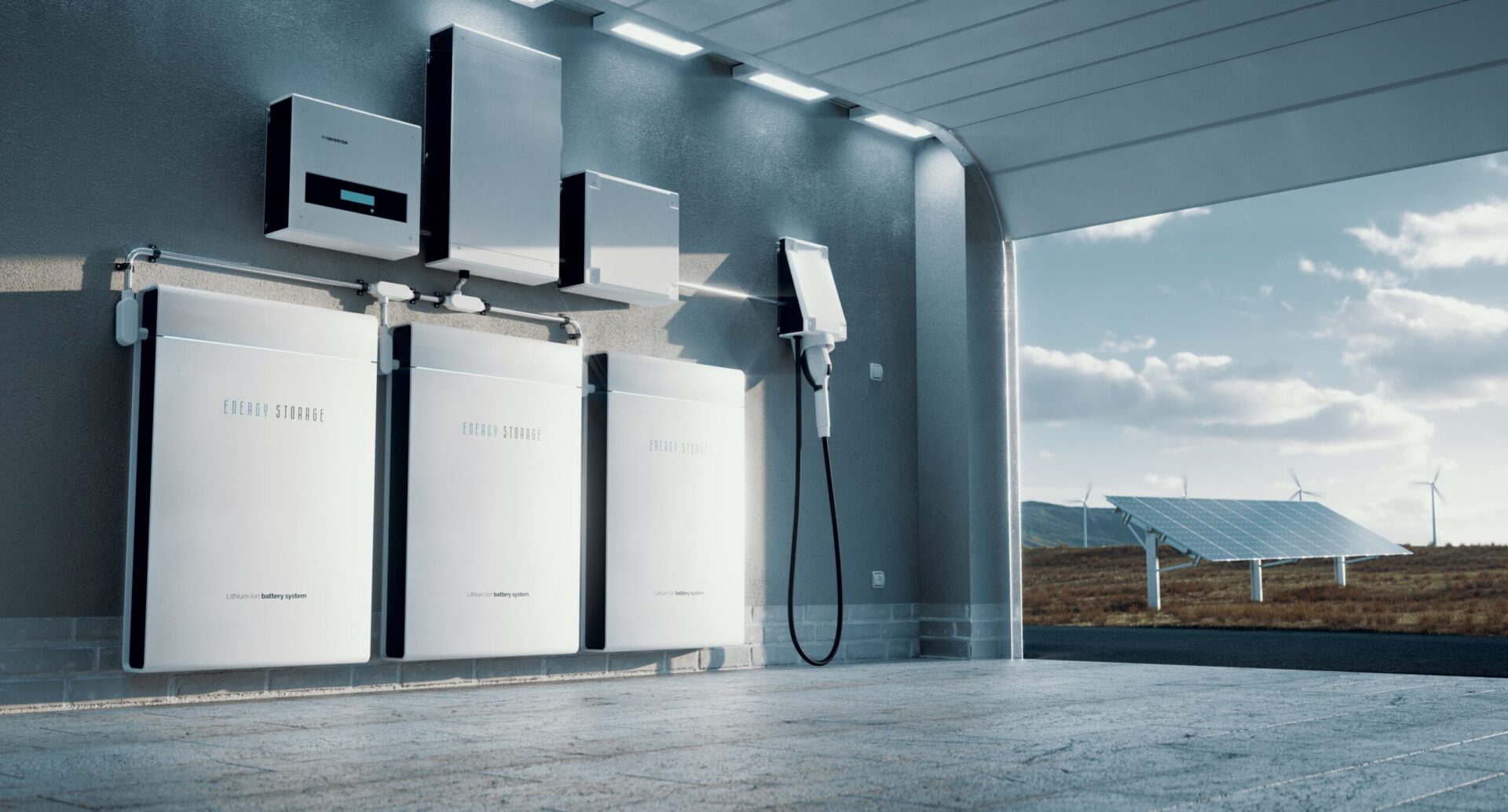


Not using all the energy produced by your solar panels? The solution is simple: install a solar storage battery. It allows you touse the electricity you produceeven when the sun is not shining.
It makes sense and we’ll explain why, especially if you have offices or a business that runs all day.
Contenu de l'article
But what is a counter that turns upside down?
Until recently, both professionals and private individuals could inject their surplus solar electricity into the grid. The meter turned upside down and cancelled out the consumption.
This system has been abolished in Wallonia for all new systems installed. In Flanders and Brussels, compensation has also been revised. What you produce is no longer automatically “reimbursed“. As a result, if you don’t consume your energy when it’s produced, you lose it… or have to buy it back later, often at a higher rate.
Why is a solar energy storage battery a good alternative?
If you install a battery to store your green energy, you’ll stop relying on the grid for your electricity. This will also have an impact on your electricity bill!
Blackout: what happened on April 28 in Spain and Portugal
The April 28, 2025a giant blackout hit Spain and Portugal. In a matter of seconds, a large part of the power grid collapsed: more than 15 GW of power lost, trains at a standstill, businesses and homes without power, and no alerts.
This type of incident reminds us of one thing: you can’t always control the network.
Why is a solar energy storage battery a good alternative?
With a battery, you store your solar electricity for use when you need it. As a result, you’re less dependent on the grid, even in the event of a power cut.
Here’s what it means in concrete terms:
- You use your energy even when the sun isn’t shining.
- You avoid free reinjection back into the grid.
- You limit your purchases during the hours when electricity is most expensive.
- You are autonomous in the event of a blackout or power failure.
For a company, it’s even more telling: you stabilize your costs, improve your energy footprint and enhance the value of your solar installation.
How does a solar energy storage battery work?
A solar storage battery operates in three stages:
- Storage : the surplus energy produced by your photovoltaic panels is automatically stored.
- Distribution When your panels are not producing (e.g. in the evening), the battery supplies your building.
- Security if the battery is full and you don’t consume it all, the excess is sometimes redirected to the network (or blocked, depending on your configuration).
It operates automaticallywithout any intervention on your part. A hybrid inverter or energy manager controls flows in real time.
Where to place solar storage batteries?
Even if a solar battery doesn’t take up much space, it needs to be carefully positioned. Properly installed, it works better and lasts longer.
Ideal conditions for a successful installation
Ideally, choose a location where the temperature temperature remains stablearound 25°C. Avoid rooms that are too cold, too hot or subject to large temperature variations. The battery also needs to be easily accessibleso that the installer can intervene quickly in the event of a check or update. Finally, it’s best to place it close to the electrical panel to avoid energy loss and facilitate wiring.
Which locations for your building?
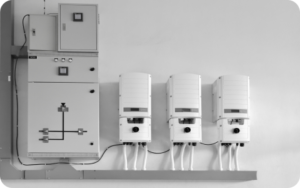
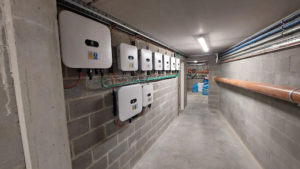
Location often depends on the type of building. In a retail or office building, we recommend a machine room, IT room or garage. For a warehouse or workshop, a closed, well-ventilated room will do. And in an apartment building? The battery should be installed in a secure, dedicated common room.
How long does a solar battery last?
A solar storage battery is not eternal, but it is designed to last over time while maintaining good performance. Properly used and installed, it can accompany your building for more than a decade.
How long can it last?
On average, a solar battery lasts between 10 and 15 yearsdepending on the model chosen, daily use and installation conditions. This generally represents between 6,000 and 10,000 charge and discharge cycles. A slight loss of capacity is normal over time, but remains progressive.
Today, most batteries are made of lithium-ionbut there are also lithium iron phosphate (LFP). The latter offer a longer service life and greater resistance to repeated cycles, making them particularly attractive for installations with regular use.
What can damage a battery too quickly?
Several factors can reduce a battery’s lifespan: too high an operating temperature, overcharging or overdischarging, or a lack of ventilation around components.
What happens if there’s less sun?
You don’t need constant sunlight to get the most out of your battery. You need to adapt the size of your battery to your actual production.
In winter or bad weather :
- Your panels produce less, so the battery fills up less quickly.
- You use the energy produced directly as a priority.
- The battery is fully charged if it has been partially charged.
Two useful tips:
- Don’t oversize the battery. You’ll be paying for a capacity you won’t reach all year round.
- In the event of very low production, you are simply fed from the grid, as before.
The solar storage battery is not there to cover 100% of your needs 365 days a year. It’s there to maximize what you produce yourselfby limiting losses and external purchases.
Gone are the inverted meters: replaced by battery storage
Nowadays, generating electricity with solar panels is all very well. But if you don’t use it right away, it goes back to the grid. And soon (in 2030), you won’t get your money back like you used to. With a storage batteryyou keep your electricity at home, to use when you need it. The result: less grid purchases, more savings..
For a company, a community or a professional building, the battery allows :
- stabilize your energy bill
- to make the most of every kilowatt produced
- limit dependence on the network
It’s not there to completely replace your supplier, but to reduce your consumption and make better use of your solar installation.
How do we work?
We analyze each situation: available space, actual consumption, long-term plans. We never propose a standard solution. We help you choose a storage battery according to your needs. Make an appointment now to ask all your questions!