

Article updated on 17/10/2025
Installing a charging station at home has become a real reflex for electric car drivers. It’s more practical, often less expensive than public charging stations, and adds value to the home.
But many are still wondering: Is this expense deductible in 2026? Vectura provides an update on deductibility of charging stations in Belgium.
Contenu de l'article
Things to remember
- Since August 31, 2024there is no longer no further tax reduction for private individuals who install a home terminal.
- At 2026the no further federal tax assistance for private for private hydrants.
- It’s still to install a charging stationeven without a premium, as it reduces recharging costs and increases the value of the property.
A quick reminder: what was there before
Between 2021 and 2024Belgium offered a tax reduction to individuals who installed a fixed terminal at home.
The conditions were :
- the terminal had to be fixednot mobile;
- located near the main residence ;
- intelligenti.e. capable of measuring and managing the load;
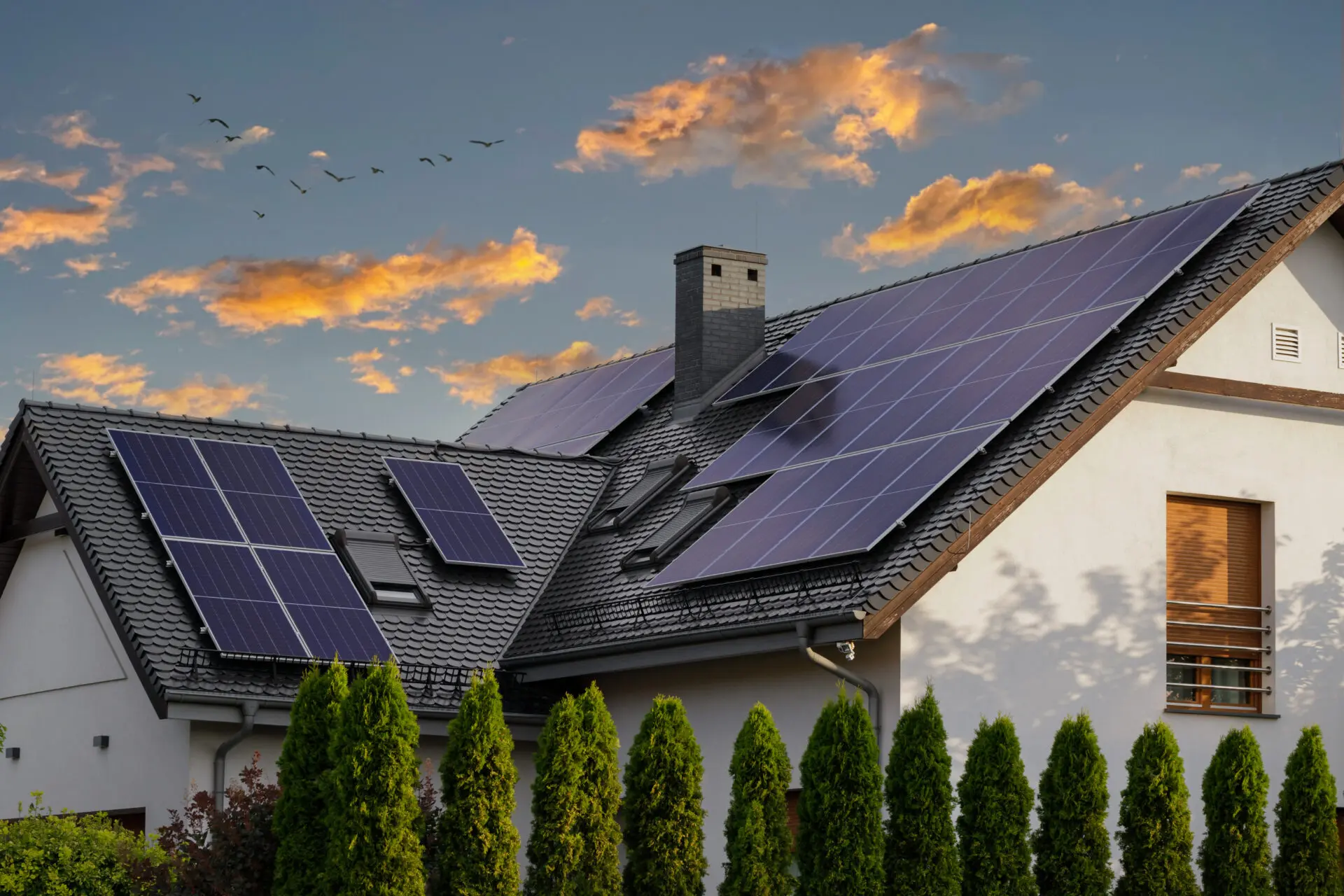
- and powered 100% green electricity (green contract or solar panels).
The rate of reduction decreased over time:
- 45 % in 2021-2022,
- 30 % in 2023,
- 15 % in 2024 (until August 31).
Since September 2024this tax reduction has completely disappeared.
In 2026: no more deductions, but other benefits
From 2026 onwards, there will be no further tax breaks for charging stations installed at home. In concrete terms, this means that neither the purchase, nor the installation, nor the inspections will be tax-deductible.
What are the other advantages of installing a terminal in 2026?
Even without a tax deduction, this is still an advantageous decision on several levels.
Long-term savings
Charging your electric car at home costs much less than at a public charging station. You can even schedule charging during off-peak hours, when electricity is cheaper. At the end of the year, you’ll notice the difference on your energy bill.
Greater comfort and autonomy
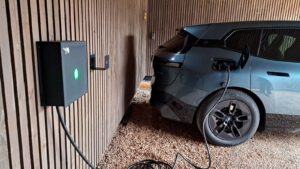
No more stressing about finding an available charging station or waiting in a parking lot. You plug in your car at home in the evening, and it’s ready to go again the next morning. It’s simple, fast and much more practical for everyday use.
Real added value for your home
More and more buyers are looking for homes that are already adapted to electric mobility. Having a charging station can therefore increase the value of your property and make it more attractive for resale.
A gesture for the planet
Recharging your car at home, especially with green electricity or electricity generated by your solar panels, means less pollution. It’s a simple, effective way to drive cleaner and contribute to sustainable mobility.
In a nutshell
Even without tax benefits, installing a charging station in in 2026 remains a smart choice: you save money, gain in comfort, enhance the value of your home and help the environment.
Concrete examples:
When the terminal becomes a home-saving tool
A family in Flémalle has been driving an electric car for a year.
In 2026, it will install a smart terminal connected to her dual-hour meter.
By scheduling recharges at night, when rates are lower, the family reduces its electricity costs by almost 30 %.
She also appreciates the convenience: the car is always ready in the morning, without having to rely on a public terminal.
Even without tax benefits, the terminal becomes a energy management tool management tool.
In Namur, a terminal that enhances the home
A homeowner in Liège decides to equip his garage with a fixed terminal before putting his house up for sale.
Visitors are immediately interested.
The installation reassures buyers considering an electric car: no work required, terminal already ready.
Result: the house sells faster and for the asking price.
Without benefiting from a tax reduction, he nonetheless makes a real gainthanks to the added value of the home.
What you need to know for 2026
Even if the tax benefits have disappeared, installing a charging station at home is still a smart choice. You’ll spend less to recharge your car, gain in everyday comfort and increase the value of your home.
Before taking the plunge, it’s important to choose the type of bollard and installation best suited to your situation.
Contact us today for all the practical information you need to make the right choice for your installation.
Frequently asked questions
Is there still a tax reduction for a home terminal?
No. The federal tax reduction expired on August 31, 2024, and has not been extended for 2026. Individuals therefore no longer benefit from a tax break for installing a home terminal.
Are smart terminals compulsory?
No, they’re not, but they’re highly recommended. A smart charging station measures electricity consumption, optimizes charging times and helps reduce energy bills.
Is it better to wait for new subsidies before installing a terminal?
There’s nothing to suggest that a new tax reduction will be introduced in 2026. If you already own an electric vehicle, installing your charging station now is more advantageous than waiting for a possible measure.
Can I deduct my terminal if I work from home?
No, not if it’s used strictly for private purposes. The deductibility of charging stations now only concerns business investments, not private individuals.
Can I use my solar panels to power my bollard?
Yes, it’s an excellent solution. Recharging your vehicle with electricity generated at home means you can drive more cheaply and reduce your carbon footprint.
Does the bollard increase the value of my home?
Yes, homes equipped with charging stations are more sought-after, especially by buyers who already own an electric vehicle or are considering buying one.
Can I install the terminal myself?
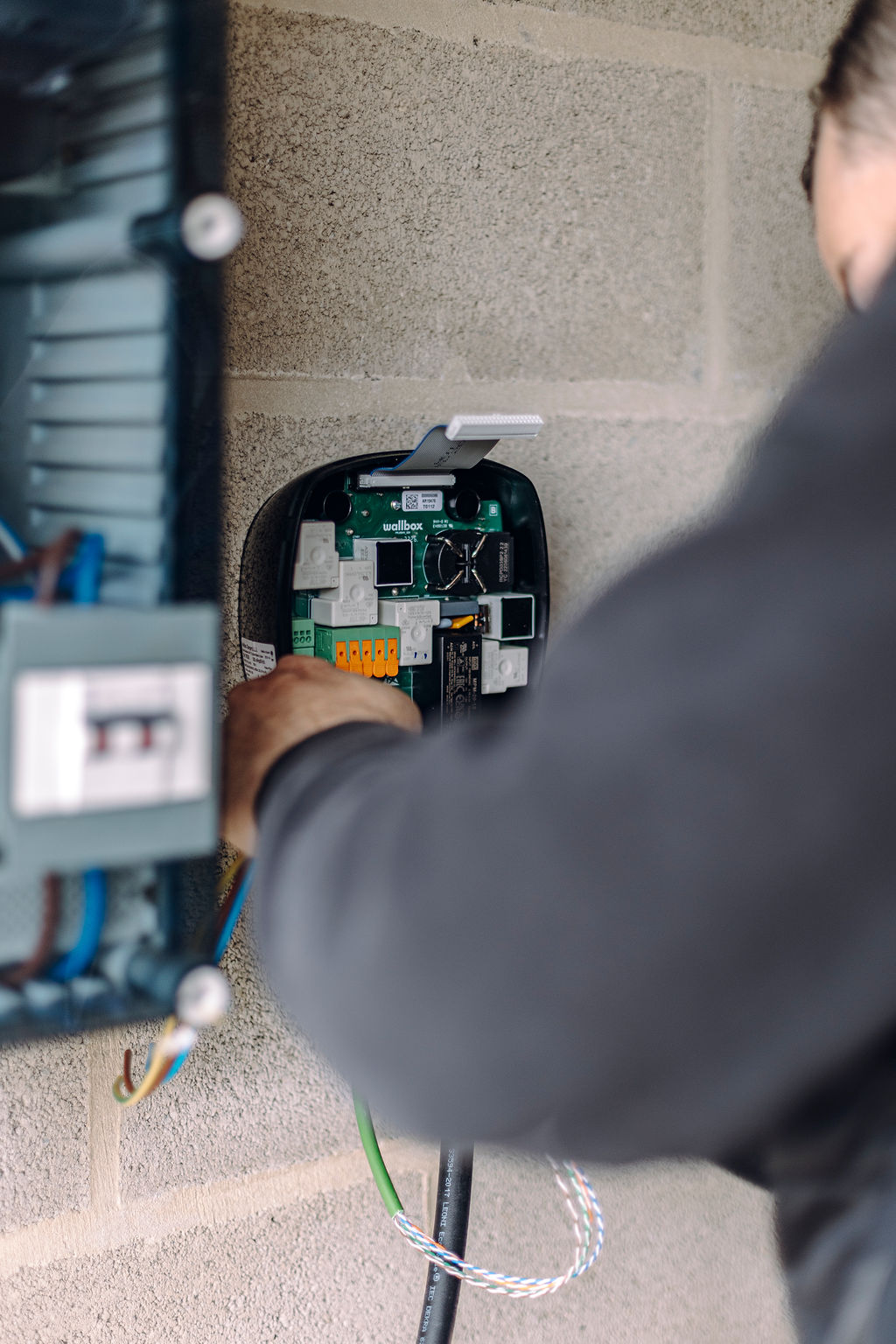
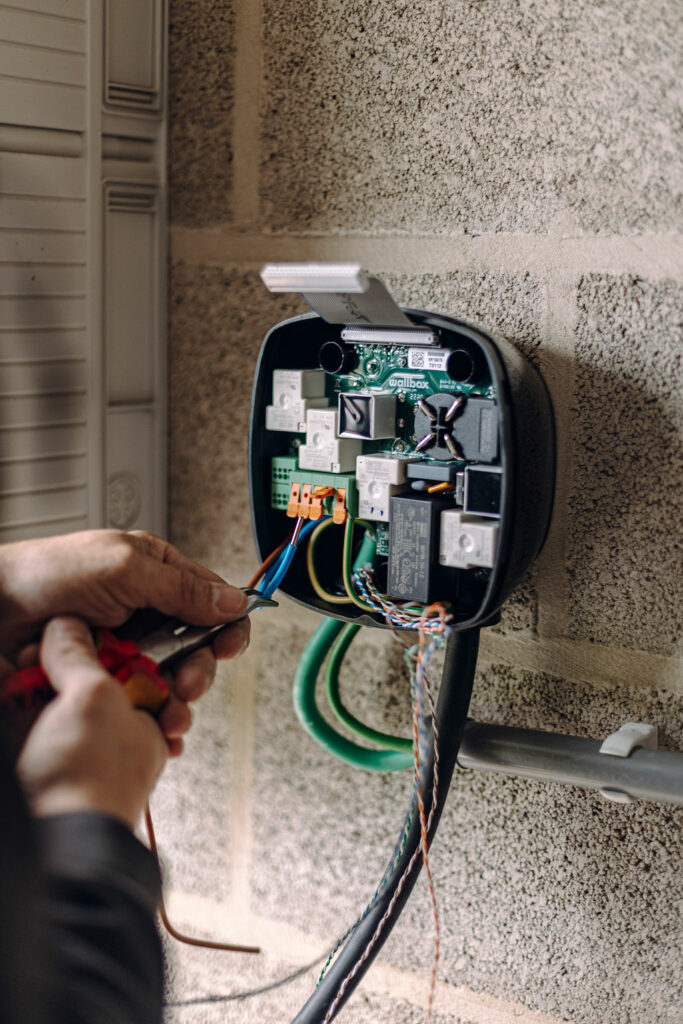
This is not recommended. Charging stations must be installed by a certified professional to guarantee safety, correct sizing of the installation and conformity of the connection.
Can one terminal be used for several electric vehicles?
Yes, some charging stations can be configured to charge several cars, either alternately or via power sharing. This is practical for households with two electric vehicles.
Glossary – Deductibility of charging stations
Deductibility of charging stations The possibility of deducting a charging station expense from income tax (no longer applicable in 2026).
Tax reduction A tax benefit that directly reduces the amount of tax payable.
Intelligent bollard A bollard that automatically measures and manages power consumption.
Home charging home charging via a fixed charging station.
Green electricity Energy produced from renewable sources such as solar and wind power.
RGIE Belgian regulations governing the safety of electrical installations.
Two-hour meter A meter that distinguishes between peak and off-peak electricity rates.
Electric mobility Electric mobility: all means of transport using electricity as an energy source.
Self-consumption Direct use of electricity generated by your own solar panels.
Certified installation Installation carried out by a certified professional, guaranteeing the conformity and safety of the system.
Sources
The information in this article comes from official publications of the SPF Financesthe Borne-électrique.bethe Wikifinas well as recent analyses by Vecturaupdated for the year 2026.